For years, the universal doctrine of organic social media growth was brute-force volume: post three to five times a day, flood the feed, and let the algorithm sort out the winners. In the early days of social networks, volume acted as an algorithmic multiplier. Every post was a lottery ticket, and the platform’s primary objective was simply keeping user feeds populated.
In 2026, that playbook is not just obsolete—it is actively suppressing your reach. Modern recommendation engines across TikTok, Instagram, LinkedIn, and YouTube Shorts have shifted from inventory-hungry chronological feeds to precision-driven interest graphs powered by hyper-efficient semantic AI. Today, posting too frequently does not double your chances of going viral; it triggers content cannibalization, dilutes your account authority, and exhausts your audience.
If you want sustainable, high-velocity organic reach, you must master the science of content cadence—the strategic balance between publishing frequency, algorithmic cooldown windows, and production value.
Key Takeaways
- Content Cannibalization Kills Reach: Publishing a new post before your previous asset completes its initial algorithmic testing pool (usually 6–18 hours) directly throttles the reach of both assets.
- The Algorithmic Lag Is Real: Posts in 2026 experience delayed lifespans; TikToks, Reels, and LinkedIn updates routinely hit their distribution stride 48 to 72 hours post-publishing.
- Platform Cadence Rules Have Diverged: The "sweet spot" is no longer uniform across networks. Optimal performance requires 3–5 high-value feed assets weekly on Instagram, 1 daily on TikTok/Shorts, and only 3–4 weekly on LinkedIn.
- Depth Beats Frequency: Recommendation engines prioritize deep dwell time, complete watch times, and direct shares over surface-level frequency. One asset with a 70% retention rate drives more compound distribution than five assets with 30% retention.
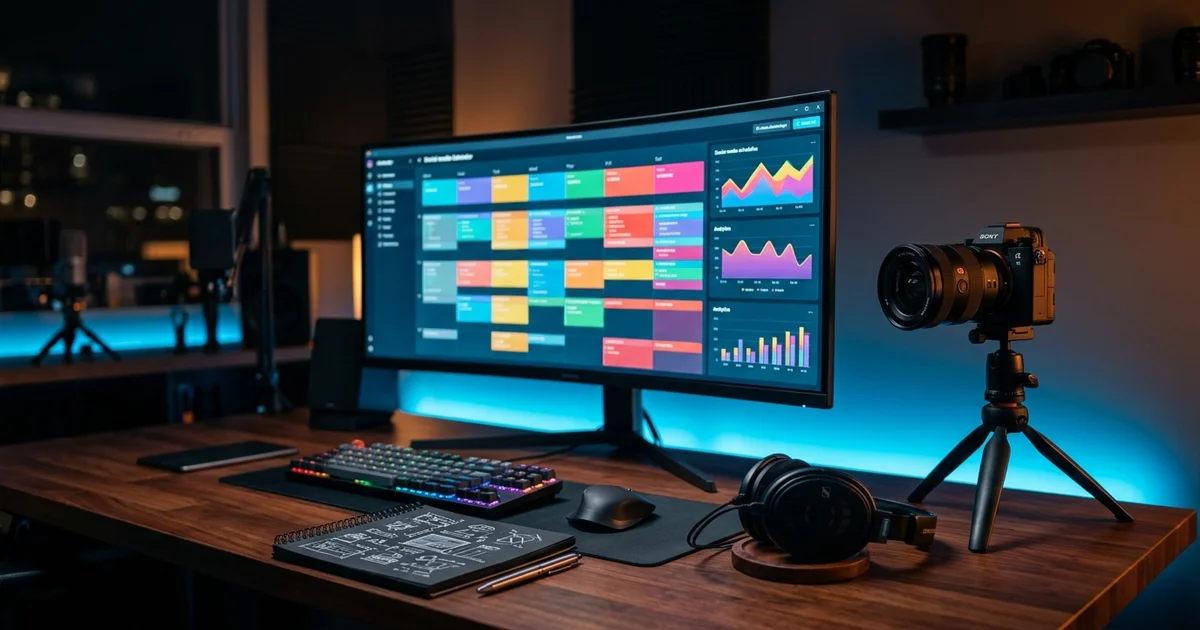
- Cadence Requires Calendar Discipline: High-performing creators avoid spontaneous posting by operationalizing their cadence through automated execution maps like FreeSocialMap.com.
---
The Content Cannibalization Effect Explained
To understand why high-volume posting breaks your reach, you must understand how modern recommendation systems evaluate newly published content.
When you hit publish, the platform does not deliver your content to your entire follower base. Instead, it injects the asset into an initial micro-testing pool—typically a blended cohort of 200 to 500 engaged followers and non-follower accounts whose interest vectors match your post’s visual and contextual metadata.
The algorithm then watches this initial cohort across critical benchmark metrics: three-second view-through rate, average watch duration, completion rate, shares, and saves. If the asset clears baseline thresholds, the system pushes it to Tier 2 (thousands of impressions), Tier 3 (tens of thousands), and beyond.
Here is where excessive frequency backfires:
- Audience Attention Competition: If you publish Post B while Post A is halfway through Tier 1 or Tier 2 testing, you force the algorithm to split the limited attention of your most active followers across two competing assets.
- Algorithmic Cooldown Truncation: Most recommendation engines automatically deprioritize earlier assets from an account the moment a new one is introduced to prevent feed monopolization. If Post A was on track to achieve breakthrough distribution at hour 14, dropping Post B at hour 8 abruptly truncates Post A’s distribution curve.
- Account Quality Degradation: Modern algorithms assign an invisible account-level reliability score. If you publish three posts a day and two of them receive sub-par engagement, your overall account performance ratio drops, penalizing future testing pool allocations.
---
The 2026 Platform-by-Platform Cadence Matrix
Every platform’s recommendation engine operates on distinct algorithmic half-lives and distribution mechanics. Here is the data-backed frequency blueprint for the major networks in 2026.
1. Instagram: The Multi-Format Ecosystem
Instagram is no longer a single feed; it is an ecosystem composed of four separate recommendation algorithms: Reels (reach engine), In-Feed Carousels (retention and save engine), Stories (relationship and conversion engine), and Broadcast Channels (loyalty engine).
- Reels & Feed Posts: 3 to 5 times per week. Distribute these evenly (e.g., Monday, Wednesday, Friday, Sunday). Because Instagram prioritizes long-tail discovery via the Explore and Reels tabs, individual assets often maintain active distribution loops for 4 to 7 days.
- Instagram Stories: Daily (3 to 6 active slides). Stories operate on a 24-hour expiration window and do not cannibalize feed reach. Keep your Story circle lit to maintain high placement at the top of your warm audience’s app, focusing on behind-the-scenes updates, polls, and interactive stickers.
- The Golden Rule: Never post two in-feed assets (Reel or Carousel) within a 12-hour window unless your account exceeds 500,000 highly engaged followers.
2. TikTok: Quality Over Hyper-Volume
While TikTok previously rewarded creators who posted 3 to 4 times per day, the 2026 TikTok algorithm—heavily refined around search intent and narrative-driven storytelling—prioritizes high retention and search indexing over raw output.
- Optimal Feed Frequency: 1 to 2 posts per day maximum (or 4 to 6 times per week for high-production accounts).
- Minimum Spacing: If posting twice in one day, space the videos by at least 6 to 8 hours (e.g., a morning educational video and an evening conversational clip).
- The Longevity Factor: TikTok search now drives massive passive views. A thoroughly scripted, SEO-optimized video can drive steady algorithmic traffic for weeks or months. Rushing out low-effort videos harms your standing in TikTok's visual search categorization models.
3. LinkedIn: The Professional Long-Tail Engine
LinkedIn possesses the longest algorithmic distribution half-life of any major social platform. A well-performing LinkedIn post frequently gains momentum on Day 2 and continues circulating through first-, second-, and third-degree feeds for up to 96 hours.
- Optimal Feed Frequency: 3 to 4 times per week. (e.g., Tuesday, Wednesday, Thursday, and either Monday or Saturday morning).
- The Double-Post Penalty: Posting twice within a 24-hour window on LinkedIn is catastrophic for reach. The LinkedIn feed algorithm systematically suppresses the impressions of your prior post to showcase your newest update. Always give your LinkedIn posts a minimum 20- to 24-hour clearance window.
4. YouTube Shorts: The Rapid-Testing Ground
YouTube Shorts acts as a primary discovery funnel for long-form channels and branded ecosystems.
- Optimal Cadence: 4 to 7 Shorts per week (roughly 1 per day).
- Strategic Execution: Shorts feed traffic operates on automated batch testing. A Short might sit at zero views for 12 hours before receiving an algorithmic burst of 2,500 impressions over a two-hour window. Maintain a steady, predictable daily cadence so YouTube's indexing systems can establish consistent audience matching.
| Platform | Optimal Weekly Cadence | Algorithmic Half-Life | Minimum Spacing Between Posts | | :--- | :--- | :--- | :--- | | Instagram (Feed/Reels) | 3–5 posts / week | 48–96 hours | 12 hours | | TikTok | 5–10 posts / week | 24–72 hours | 6 hours | | LinkedIn | 3–4 posts / week | 72–120 hours | 24 hours | | YouTube Shorts | 5–7 posts / week | 24–48 hours | 8 hours |
---
The Minimum Effective Dose (MED) Strategy
One of the biggest mistakes solo founders, marketing directors, and creators make is designing a cadence based on their peak productive week rather than their baseline capacity. When production slows down, cadence collapses, signaling inactivity to the algorithm and eroding audience expectations.
To build long-term traction, adopt the Minimum Effective Dose (MED) framework:
Step 1: Define Your Baseline Cadence
Determine the lowest output volume you can guarantee without sacrificing quality, regardless of business fires, client demands, or creative slumps. For most creators, this is:- 3 high-impact short-form videos (Reels/TikTok).
- 2 value-dense text-and-image or carousel posts (LinkedIn/Instagram).
- Daily engagement sprints (15 minutes responding to comments).
Step 2: Establish the "Depth Over Frequency" Standard
Before adding another publishing slot to your weekly schedule, audit the depth of your existing assets. Ask:- Does this post deliver an immediate, tactical takeaway in the first slide or first five seconds?
- Is the pacing tight enough to keep the retention curve above 60%?
- Would a reader save this post to reference three months from now?
If you replace three mediocre, rushed videos with one masterfully structured, deeply researched asset, your aggregate reach and follower conversion rate will climb dramatically.
Step 3: Bank a 2-Week Buffer
Never publish content produced the same day. Build a rolling 10- to 14-day backlog of scheduled, formatted assets. A production buffer insulates your algorithmic consistency from unexpected disruptions.---
Transforming Cadence into an Execution Calendar with FreeSocialMap
Knowing your ideal posting frequency is only half the battle; the real challenge is executing that cadence week after week without staring at a blank screen or burning out your creative team.
This is precisely why top creators and lean marketing teams rely on FreeSocialMap.com. Rather than manually tracking platform spacing rules, testing intervals, and content themes on disjointed spreadsheets, FreeSocialMap provides a completely free, AI-powered 30-day social media strategy generator.
By inputting your target niche, industry focus, and primary platforms, FreeSocialMap constructs a custom, day-by-day operational roadmap that:
- Automatically spaces your content to respect algorithmic testing windows and cooldown periods.
- Balances high-reach discovery formats (like short-form video) with high-retention assets (like deep-dive carousels).
- Eliminates decision fatigue by generating actionable daily hooks, task checklists, and execution reminders.
Instead of stressing over how many times to post this week, you get a clean, ready-to-execute 30-day roadmap designed for compound organic reach.
---
Frequently Asked Questions
Q: Does posting more than once a day on Instagram hurt your reach? A: Yes, for the vast majority of accounts, posting multiple in-feed posts within 12 hours causes content cannibalization. The second post splits audience engagement and truncates the algorithmic distribution of your first post before it can complete its discovery cycle.
Q: What is the ideal time of day to post in 2026? A: Specific posting hours matter significantly less today than they did during the chronological feed era because algorithms distribute content asynchronously over days. However, publishing 1 to 2 hours before your audience's peak geographic activity window ensures your initial testing pool engages quickly enough to validate the asset.
Q: If I stop posting for a week, will the algorithm punish my account? A: Modern algorithms do not permanently penalize accounts for short breaks, as each post is evaluated independently on the interest graph. However, you will experience a temporary dip in immediate reach upon return because your baseline audience momentum and Story engagement loops have paused.
Q: How long should I wait between posting on LinkedIn? A: You should leave a minimum of 18 to 24 hours between LinkedIn posts. The LinkedIn algorithm has a slow, multi-day distribution curve, and publishing a second post prematurely routinely cuts the impressions of the first post by up to 60%.
Q: Is it better to post consistently on fewer platforms or post sporadically across all of them? A: It is always better to dominate one or two platforms with an optimized, consistent cadence than to scatter low-quality, sporadic posts across four or five. Master the pacing and audience culture of your primary channel before expanding your distribution footprint.