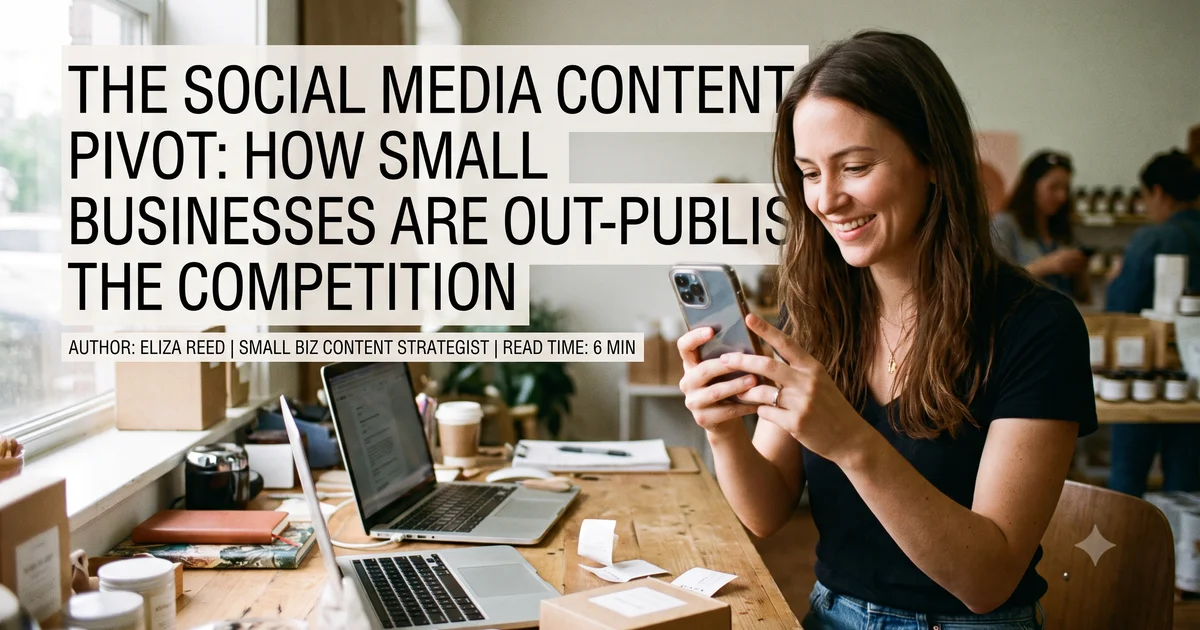
Not too long ago, a small business’s social media strategy consisted of posting a high-res product photo once a week, sharing a holiday greeting, or running a static Facebook ad.
Today, that playbook is virtually extinct.
Over 77% of small businesses now rely on social media as a primary engine for marketing, sales, and customer relations. Driven by algorithmic changes, the rise of short-form video, and accessible generative tools, small businesses are shifting from occasional posters to full-fledged content creators.
Here is a breakdown of why this content shift is happening, what formats are driving actual ROI, and how small teams are scaling production without expanding their budgets.
---
What’s Driving the Small Business Content Surge?
Several structural shifts in the digital economy have forced small businesses to dramatically increase their content output.
+-----------------------------------------------------------------------+
|                       DRIVERS OF THE CONTENT SHIFT                    |
+------------------------------------+----------------------------------+
| Algorithmic Discovery              | Shift to Short-Form Video        |
| Feeds prioritize engagement &      | TikTok, Reels & Shorts demand    |
| high frequency over follower lists | higher volume & rapid testing    |
+------------------------------------+----------------------------------+
| Lower Friction with AI Tools       | Demand for Authenticity          |
| 85% of marketers use AI to speed   | Unfiltered, human content beats  |
| up creation & editing workflows    | polished corporate ads           |
+------------------------------------+----------------------------------+
1. The Death of the "Static" Feed
Platforms like TikTok, Instagram Reels, and YouTube Shorts have fundamentally changed how content is distributed. Social feeds no longer show content exclusively to existing followers; algorithms index content based on immediate viewer engagement and watch time. To stay visible in discovery feeds, brands must test multiple angles, hooks, and formats weekly.
2. The Authenticity Advantage
Modern consumers—especially Gen Z and Millennials—have developed ad fatigue. Polished, high-budget agency commercials are often scrolled past in milliseconds. In contrast, "raw" behind-the-scenes videos filmed on a smartphone carry high trust and high watch time. Small businesses possess a structural advantage here: they have real stories, real founders, and genuine daily operations to document.
3. Social Commerce & Search
Social platforms have become primary search engines for younger generations. Over 54% of social media users research products directly on social channels before making a purchase. If a business isn't actively producing content that answers questions, showcases products, or demonstrates proof, they risk becoming invisible to searchers.
---
Formats Driving the Highest Return on Investment
Not all content is created equal. While production volume has increased, successful small businesses focus on specific high-converting formats.
| Content Format | Primary Function | Performance Profile | | --- | --- | --- | | Short-Form Video (<60s) | Reach & New Discovery | Highest overall reach, drives virality and top-of-funnel brand awareness. | | Behind-the-Scenes (BTS) | Trust & Community Building | High engagement; builds emotional connection by showing the human side. | | Infographics & Carousels | Authority & Education | 30x more likely to be read than long articles; highly shareable and saveable. | | User-Generated Content (UGC) | Social Proof & Conversion | Reduces ad fatigue and boosts conversion rates by leveraging customer reviews. |
"People don't buy from logo avatars; they buy from people. Small businesses that show the faces, hands, and process behind their product consistently win against silent competitors."
---
How Small Teams Scale Output Without Burnt-Out Founders
The biggest hurdle for small business owners has always been time. How can a team of three produce 10–15 social pieces a week alongside running actual operations?
1. Documenting Over Creating
Instead of setting aside hours to script and film setups, founders are adopting a "document, don't create" mindset:
* A baker films a 15-second clip of icing a cake. * A local contractor records a quick tip while on a job site. * A boutique owner shares a quick voiceover explaining why they stocked a new item.
2. Leveraging AI as a Creative Assistant
According to industry benchmarks, 85% of marketers now use AI tools to assist in content creation. Small businesses use AI to:
* Generate 10 hook variations from a single video concept. * Reformat spoken video audio into caption overlays, blog posts, and newsletter updates. * Speed up graphic layout and image editing.
3. The 1-to-5 Content Repurposing Engine
To maximize efficiency, smart teams don't create separate content for every platform. They take one core asset and re-engineer it into multiple native pieces:
                  ┌──────────────────────────────┐
                  │ Core Asset: 3-Min Demo Video │
                  └──────────────┬───────────────┘
                                 │
     ┌───────────────────┬───────┴───────┬───────────────────┐
     ▼                   ▼               ▼                   ▼
┌─────────┐        ┌───────────┐   ┌───────────┐       ┌───────────┐
│ 2 Short │        │ Carousel  │   │ Text Post │       │   Email   │
│ Clips   │        │ Graphic   │   │ Summary   │       │ Highlight │
│(Reels/  │        │(Instagram/│   │(LinkedIn/ │       │ (Weekly   │
│TikTok)  │        │ LinkedIn) │   │ Facebook) │       │ Newsletter│
└─────────┘        └───────────┘   └───────────┘       └───────────┘
---
Key Takeaways for Small Business Owners
- Prioritize Frequency over Flawlessness: Algorithms reward consistent output and iteration over infrequent perfection.
- Focus on the First 3 Seconds: The "hook" determines whether a viewer stays or swipes. Focus effort on visual or textual hooks that state the value immediately.
- Build a Repeatable Workflow: Set aside 1–2 hours a week to review performance, batch captions, and schedule posts so daily operations aren't disrupted.
The shift toward high-volume social media content isn't a passing trend—it is the new baseline for brand discovery and sales. Small businesses that embrace authentic, regular content creation will continue to capture market share from larger, slower-moving competitors.