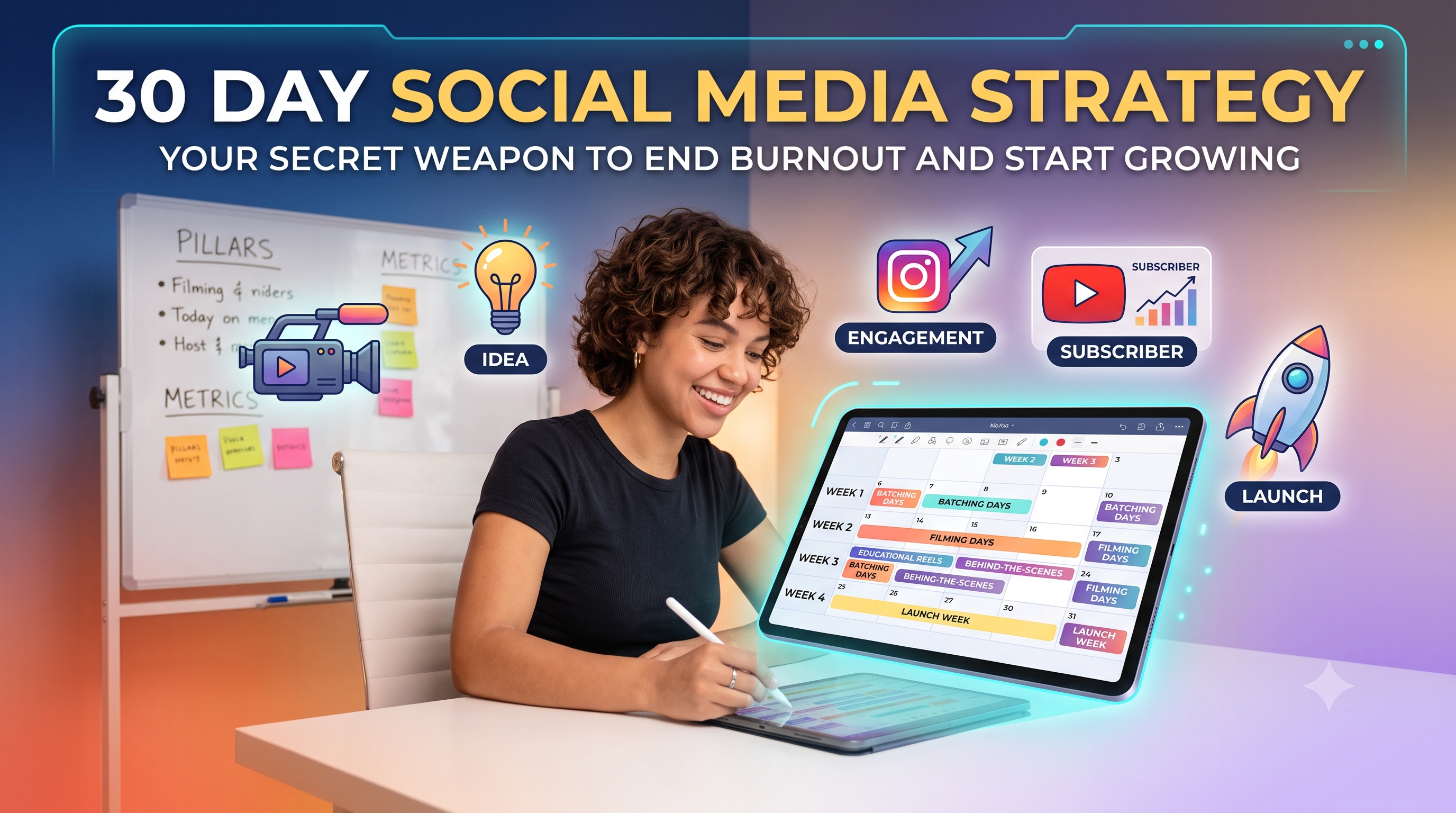
If you are a content creator, you know the specific brand of panic that sets in when you realize you haven’t posted today. You open up Instagram, TikTok, or YouTube, stare at a blank draft, and try to force a burst of creative genius on the spot.
Spontaneous posting can be fun occasionally, but using it as your main strategy is a fast track to burnout and stagnant growth.
The most successful creators don't live post by post. They run on a plan. Transitioning from daily firefighting to a 30-day social media strategy changes the entire game. It shifts your focus from just "surviving the algorithm" to building a sustainable, scalable business.
---
1. You Stop Guessing and Start Batching
The biggest drain on a creator’s energy isn't the actual filming or writing—it's the constant context-switching. Setting up lighting, adjusting your microphone, finding a script, and editing a single piece of content every single day takes hours.
When you have a 30-day roadmap, you can embrace content batching.
* Day 1-2: Brainstorming and writing all scripts/outlines for the month. * Day 3-4: Filming all video assets in one or two dedicated recording sessions. * Day 5-6: Editing, caption writing, and scheduling.
By grouping similar tasks together, you stay in a focused creative flow. You can knock out a month’s worth of short-form video in a weekend, leaving the remaining 20+ days of the month completely free to engage with your community, learn new skills, or simply rest.
---
2. Structural Consistency Beats Algorithm Luck
Social media algorithms thrive on predictability. They want to know exactly who to serve your content to, and they favor accounts that post consistently.
A 30-day strategy allows you to build a reliable content mix based on intentional pillars (e.g., 40% Educational, 30% Entertainment, 20% Behind-the-Scenes, 10% Community Engagement). Instead of scrambling for any random idea on a Tuesday afternoon, you know exactly what bucket that day's content needs to fill.
This structure gives your audience a reason to hit "Follow." They learn exactly what value you provide, and they know when to expect it.
---
3. High-Level Analytics Reveal What Actually Works
When you post on a whim, it's hard to tell why a post performed well or poorly. Was the hook bad? Was the timing off? Were people just not online?
A monthly strategy lets you look at your performance from a bird's-eye view. At the end of 30 days, you can look at your metrics holistically:
The 30-Day Review Test: Which 3 posts drove the most saves and shares? Which format (e.g., carousels vs. reels) kept people watching the longest?
Instead of reacting to the daily emotional rollercoaster of views, you look at cold, hard monthly data. If educational carousels outperformed everything else in weeks 1 through 4, you simply lean heavily into that format for the next 30 days.
---
4. It Creates Space for High-Value Launches and Campaigns
If you want to monetize your platform—whether through brand partnerships, digital products, merch, or local events—you cannot rely on last-minute posts. Successful promotions require a buildup.
With a 30-day strategy, you can map out a proper marketing funnel:
* Weeks 1 & 2: Post broad, highly shareable content to grow your reach and introduce a specific problem your audience faces. * Week 3: Share deep-dive, high-value content that builds trust and introduces your upcoming solution. * Week 4: Launch your product, event, or service with clear, direct calls-to-action (CTAs) while your audience is warmed up and primed.
This deliberate buildup makes your promotional content feel like a natural next step for your followers rather than a sudden, jarring sales pitch.
---
The Takeaway: Control Your Feed, Don't Let It Control You
A 30-day social media strategy doesn't lock you into a rigid cage. If a massive, breaking trend happens in your niche on Day 12, you can absolutely pivot and make a video about it.
What the plan does do is give you a safety net. It ensures that even on days when you’re tired, sick, or uninspired, your brand keeps moving forward automatically. You stop treating your content creation like a stressful hobby and start running it like a business.