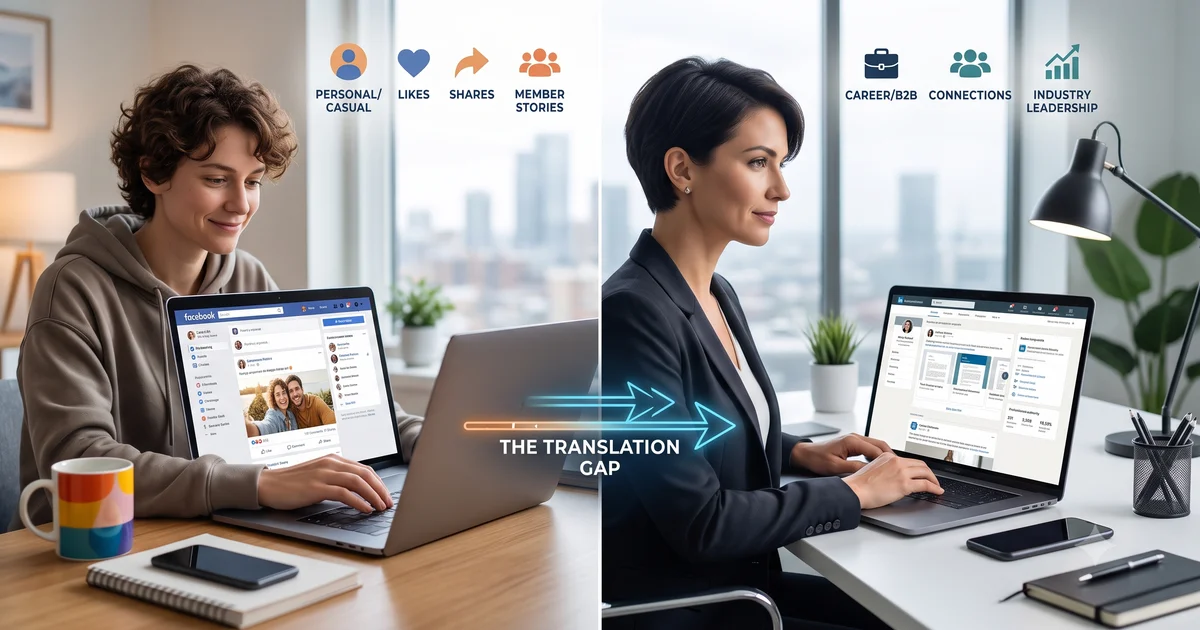
It’s one of the most common—and costly—mistakes in digital marketing: treating all social media platforms like they’re the exact same audience sitting in different rooms.
You spend hours crafting an engaging Facebook post, complete with a casual tone, trending meme graphics, and a link to your latest site update. Then, to save time, you hit copy-paste and publish the exact same post to LinkedIn.
The result? Crickets. Low impressions, zero meaningful comments, and zero leads.
While both Facebook and LinkedIn are social networking powerhouses, they operate on completely different user mindsets, algorithmic incentives, and content ecosystems. Copy-pasting your Facebook strategy onto LinkedIn simply won't work. Here is why—and how to adapt your plan for B2B success.
---
1. The Mindset Gap: Casual Browsing vs. Career & Business Investment
The fundamental difference between Facebook and LinkedIn comes down to user intent.
* The Facebook Mindset: Users typically open Facebook to unwind, connect with friends and family, check local community news, laugh at memes, or browse marketplace listings. It’s a personal space driven by passive entertainment and emotional connection. * The LinkedIn Mindset: Users log onto LinkedIn with a professional agenda. They want to advance their careers, solve business challenges, network with peers, establish industry authority, or scout new talent and vendors.
When you post purely entertainment-focused or ultra-casual Facebook-style content on LinkedIn, it feels out of place. LinkedIn users aren’t looking for distraction; they’re looking for value, professional growth, and actionable insights.
---
2. Algorithm Mechanics: Social Graph vs. Economic Graph
Both platforms use sophisticated algorithms to curate user feeds, but they prioritize vastly different connection signals.
[ Facebook Algorithm ] ➔ Prioritizes Social Connections, Local Activity, High Shares, & Viral Engagement
[ LinkedIn Algorithm ] ➔ Prioritizes Professional Relevance, Industry Expertise, Dwell Time, & Value-Driven Comments
* Facebook favors posts that generate quick emotional reactions, tag friends, or encourage shares across close social circles. Local community updates and relatable personal stories thrive here. * LinkedIn prioritizes relevance and expertise. The algorithm evaluates whether your content provides professional utility to your industry network. It rewards dwell time (how long someone spends reading your post) and rich, multi-sentence discussion in the comments over simple "likes."
---
3. Content Formats: Links vs. Native Value
On Facebook, outbound links—sharing a blog post, news article, or landing page link directly in the post text—are standard practice. Facebook users are accustomed to clicking out to external sites for articles or media.
On LinkedIn, dropping a raw outbound link in a basic text post is a quick way to tank your reach.
How Format Requirements Differ
| Content Element | Facebook Strategy | LinkedIn Strategy | | --- | --- | --- | | Primary Formats | Single images, short video clips, link previews, event pages | Multi-page PDF Carousels, text-only value breakdowns, long-form articles | | Outbound Links | Included directly in post captions or link previews | Placed in the comments or integrated naturally within native long-form content | | Visual Style | Casual B-roll, lifestyle photography, memes, polished ad creatives | Document breakdowns, clean infographics, professional headshots, behind-the-scenes business operations | | Tone of Voice | Friendly, conversational, community-focused | Authoritative, insightful, reflective, vulnerable yet professional |
---
4. Personal Branding vs. Company Pages
On Facebook, small businesses and brands typically drive marketing through a Company Page or local business profile. Organic personal profiles are generally reserved for private life.
On LinkedIn, the dynamic is flipped: People follow people far more than they follow brands.
* The Facebook Model: Brand Page publishes post ➔ Runs ads to amplify reach ➔ Audience interacts with the brand identity. * The LinkedIn Model: Founders, executives, and employees post personal insights ➔ Build individual authority ➔ Drive organic trust back to the company page or product.
If your LinkedIn strategy relies solely on posting generic company announcements from a brand page without active executive or employee advocacy, your organic reach will remain severely limited.
---
How to Adapt Your Strategy for LinkedIn Success
You don't need to reinvent the wheel for every platform, but you must translate your content for the LinkedIn ecosystem:
- Shift from "Announcing" to "Teaching": Instead of posting "Check out our new blog post on social media strategy!" (a typical Facebook post), turn the core takeaways of that blog post into a 5-slide PDF carousel or a text-focused breakdown that delivers immediate value right on the feed.
- Optimize for Dwell Time: Use strong written hooks in the first 2–3 lines of your post to encourage readers to click "see more." Deep-dive text breakdowns and native document carousels keep users engaged longer, signaling high quality to the algorithm.
- Encourage Employee Advocacy: Empower team members and company leaders to share behind-the-scenes lessons, industry hot takes, and professional wins from their personal profiles.
- Engage in the Comments: Don't just post and ghost. Respond to comments with thoughtful follow-up questions to spark meaningful professional dialogue—this is where the best LinkedIn networking and lead generation happen.
---
The Bottom Line
Cross-posting the exact same content everywhere is a recipe for mediocrity. By understanding the distinct user intent, algorithmic preferences, and content formats that thrive on LinkedIn versus Facebook, you can transform your professional presence from ignored noise into an engine for authority, connections, and strategic growth.